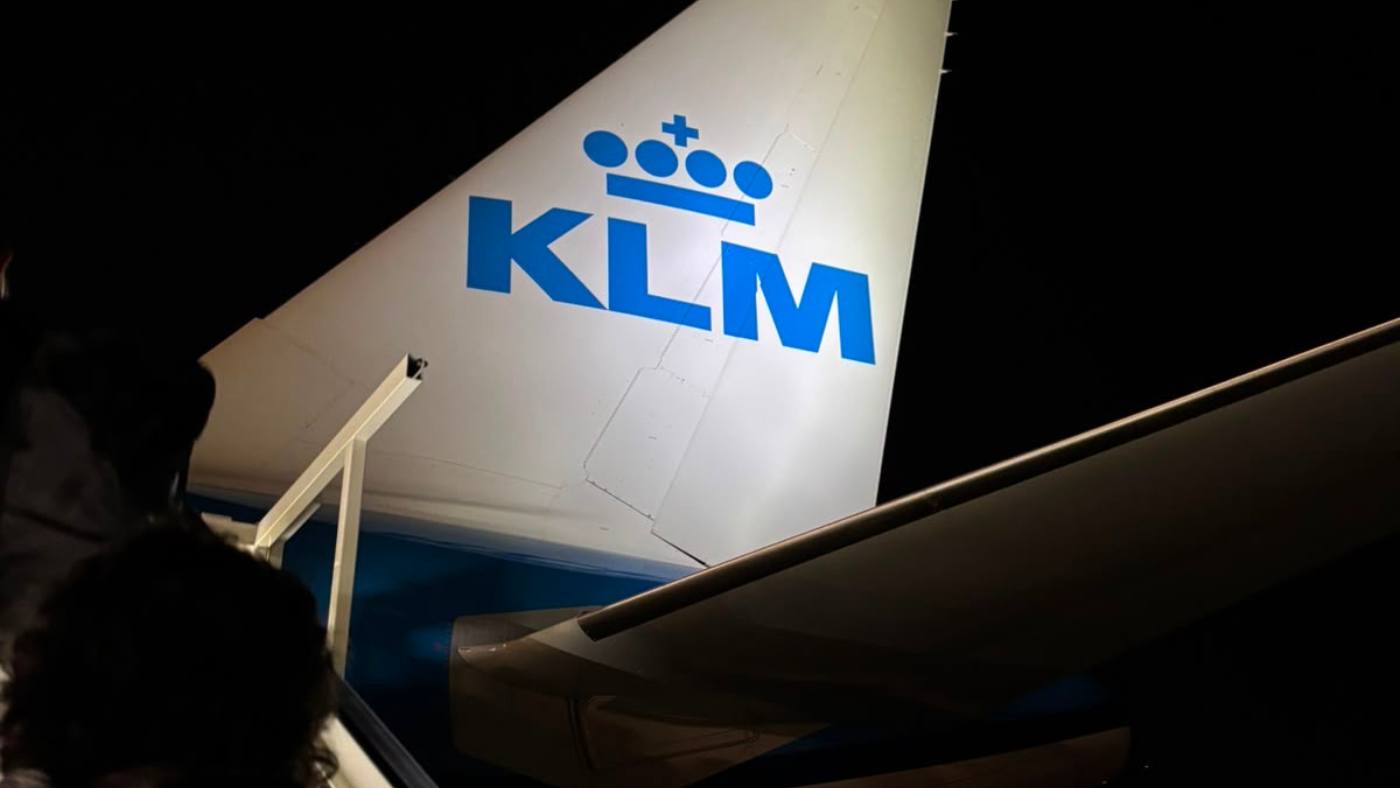
A few nights ago, one of my clients stood at a check-in counter in Santo Domingo with a valid, paid, fully issued ticket, and a computer that said no.


A few nights ago, one of my clients stood at a check-in counter in Santo Domingo with a valid, paid, fully issued ticket, and a computer that said no.
Not because he had done anything wrong, or due to a lack of seats, or even because the ticket was incorrect. He was denied boarding because two airline systems could not communicate with each other. Somewhere in the handshake between a marketing carrier and an operating carrier, an IATA number restriction had quietly switched a real person’s real journey off.
He was stranded for two nights. As his travel professional, I was too, in every way that matters. On the phone from home at 01h30 in the morning, while he stood at a counter in another country, on the other side of the world, he was watching a boarding agent stare at a screen that had nothing more to offer either of us. Nobody was able to pick up a phone and correct a system glitch. Two airlines were unable to speak to each other over a phone call.
This got me thinking…..as I do.
As this case moves from the “person stranded at an airport” to a “case number in a queue,” it has stopped being urgent. It has become an e-ticket, and not one you can use to travel with, either. It has become a ticket that can simply get closed, reopened, forwarded, and closed again, each time by someone whose job is not to fix the problem. Their job is simple: move it further along and follow the script.
Customer Care pushes it to the operating airline, Copa in this case; Copa pushes it back to KLM. Why? Simply because it is not their responsibility. The ticket is issued on KLM paper, and the flight is booked under their flight number.
And one check-in terminal simply said, ” We do not recognise the IATA number”. A week later, we are still playing ping-pong with a computer that said no and no human being saying, “Let me help get to the bottom of this.”
The simple question on everyone’s mind should not be who is at fault; it should be how this happened and how we can ensure history does not repeat itself.
Imagine buying a tub of yoghurt from your favourite store, in my case Woollies in South Africa, and the yoghurt is sour. Does Woollies send me to the manufacturer in this case, or do they simply replace the tub? The yoghurt is branded Woollies; it is sold by Woollies and therefore their responsibility to honour the product you have purchased from them.
 If only it were as simple as double cream yoghurt.
In this case, my traveller has not purchased a ticket from Copa Airlines; he purchased it from KLM, sold, branded and simply operated by Copa.
I do not think anyone sets out to build a system this frustrating on purpose. It is created to maximise the routing network, to offer better connections and generate more revenue. Not by Copa, but by airlines who wish to take you further, KLM in this case.
Now, to manage and operate this vast network and multitude of platforms available to sell these seats, comes the automation, the API’s and the chatbots. Thank you, Mark Zuckerberg, for creating the business model: no people means no accountability. Quietly, the maths starts working in the company’s favour. Every extra click, every “please select a category,” every “this case is now closed” is a small tax on the customer’s patience. Pay enough of that tax, and most people simply stop. They accept the loss, absorb the cost, and they move on. Why? Because they simply want to get home.
Until it meets a travel professional who is hell-bent on demanding an answer and recourse.
The Facebook model, applied to something that was never meant to be automated: a human being trying to move.
Here is the part the process design never seems to grasp. Travel is not a static product, not a subscription you renew or a parcel you track. Every itinerary is a slightly different arrangement of humans, timing, connections, documents, and circumstance, and every disruption is its own small emergency with its own shape.
There is no dropdown menu for “stranded at midnight in a country where you do not speak the language, holding a valid ticket that the system has decided is not valid.” There is no automated flow for the particular fear on a client’s face when the counter agent shrugs and says there is nothing more they can do. “ The Computer says Noooooooo” That moment needs a human who can make a judgment call, not a game of responsibility ping-pong.
The more the front line gets replaced by automation, the fewer humans will be available who are actually empowered to say “let me fix this,” and the more disputes get shuffled sideways instead of resolved. I understand automation reduces cost. What it also reduces, quietly and cumulatively, is the number of people whose job it is to simply help.
Here is the part I suspect gets missed in whatever spreadsheet justified all this automation in the first place. My client’s itinerary was booked on a corporate agreement with Air France and KLM. That agreement did not save him from being stranded, and it does not save the airline from what comes next.
I will now simply move every seat to other carriers, their competitor carriers. They are not necessarily more prestigious or more comfortable. They could be cheaper; they might not even be. Simply because KLM has spent a week demonstrating that a corporate agreement buys no priority, loyalty, accountability, or actual service when something went wrong.
Credit where credit is due to the account manager who answered the phone at 23h00, but even her poor hands were tied and are still tied by corporate red tape.
This is the real cost of a system designed to make disputes too expensive to pursue. It does not just lose the one complaint. It teaches the people who book in volume that loyalty and cost are the only two variables left; service has to be part of the equation.
Travel, at its core, is one of the most human things we do. It is people leaving home, crossing borders, trusting strangers with our bags, bookings, and our safety. When it goes right, it barely needs anyone to notice. When it goes wrong, it needs someone who can actually act.
I am not against technology. I use it every day, and it does a great deal of the invisible, unglamorous work that keeps this industry moving. It should, however, be doing the parts of the job that do not need a human. Freeing time for humans to do the parts that do.
Right now, in too many cases, it is the other way round. The chatbots and the forms have taken over the front door, and the humans have been pushed further and further back, harder and harder to reach, exactly when they are needed most.
An airline can automate its check-in, its rebooking, its complaints intake, and even its apologies. What it cannot automate is a person standing at a counter at night, needing another person to simply say, “I’ve got this, let me help you get home.”
Until the industry remembers that, the rest of us, agents, advocates, and travellers alike, will keep being handed a well-designed process instead of a resolution.
So well said Paula! Humans need Humans to move. When we need someone, we need someone in the moment. Not a chat bot named something catchy that gives us 20 prompts before that “connecting you to an agent” who then sometimes cannot help in that que, and transfers you through to another que, where you then wade through what seems like hours when dealing with an emergency, to at times not even get it resolved. Or when you are kicked out of said 20 prompts, and have to restart your prompts. I have always believed, and will continue to believe that Humans power everything, and relationships and partnerships are at the core of what we do. We need to have the computer to say yes, and when it says no, we need it to be fixed, without leaving a client in the middle of a situation that can almost be described as complete limbo.
Thank you for your comment. I couldn’t agree more; endless queues and in travel, every second counts. You have described the frustration we, as travel professionals, face on the daily so well. Who needs a chattenborourgh, when it’s a race against the clock and don’t even get me started on the call centres with press 1, 3, 1, 2- where am I again!